News & Insights · Feature
Buying Art at Auction vs Buying Privately: What Collectors Should Know
Discover the differences between buying art at auction and through private sale, and why experienced collectors increasingly use both when acquiring contemporary artworks.
· By stu@asok.co.uk · 9 min read
For many people entering the contemporary art market, auctions appear to sit at the centre of everything.
The biggest headlines come from evening sales. Record-breaking prices are reported internationally. Catalogues are published weeks in advance and bidding can be followed in real time from almost anywhere in the world. If your understanding of the art market comes primarily from newspapers or social media, it would be easy to assume that auctions are where most significant buying and selling happens.
Spend enough time speaking with experienced collectors, however, and a different picture begins to emerge.
Many of the most sought-after artworks never appear in an auction catalogue at all. They move quietly through private sales, collector networks, advisors and long-standing relationships that exist largely outside public view. While auctions remain an important part of the market, they represent only one route through which collectors acquire works.
Increasingly, serious buyers move between both worlds.
The question is rarely whether auction or private sale is better. More often, it is about understanding which route makes the most sense for a particular artwork, artist or collecting objective.
Why Auctions Dominate the Conversation
Part of the reason auctions attract so much attention is simple: they are visible.
Auction houses such as Sotheby’s, Christie’s and Phillips operate in public. Estimates are published, bidding is competitive and results become part of the wider market record. For collectors trying to understand demand, pricing and market momentum, auctions provide a level of transparency that is difficult to replicate elsewhere.
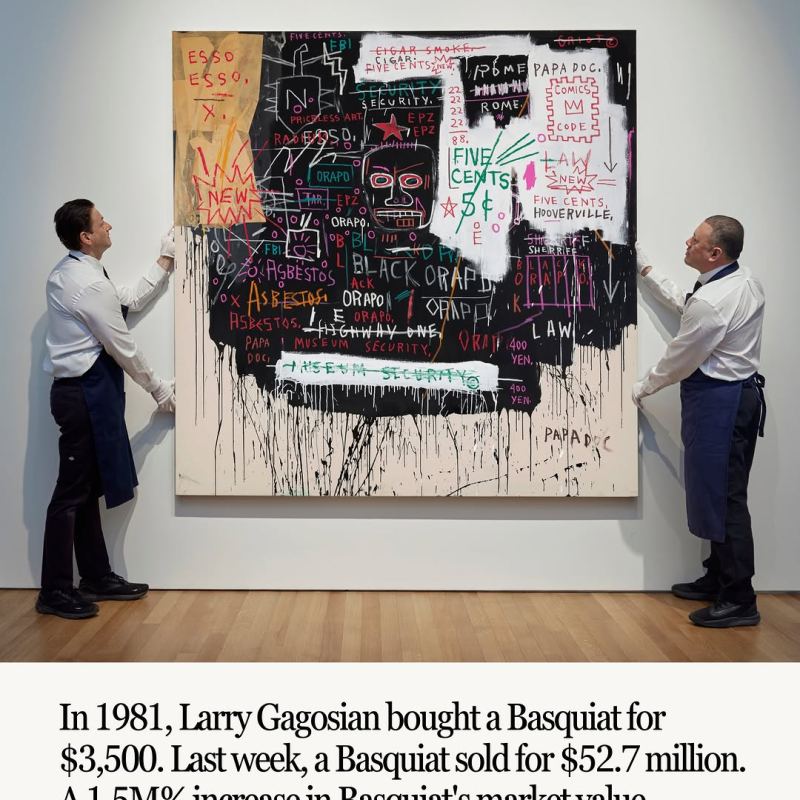
They also create theatre. The sale of a major artwork can become a cultural event in its own right. Collectors compete publicly, prices escalate in real time and significant works often generate international press coverage. Some of the most famous moments in contemporary art have happened under the spotlight of the auction room.
That visibility gives auctions an outsized presence within conversations about the art market. Yet visibility and market share are not necessarily the same thing.
Private sales now account for a substantial proportion of activity across the global art market, particularly at the higher end. Many significant transactions simply happen away from public view.
What Auctions Do Exceptionally Well
Despite the growing importance of private sales, auctions remain incredibly valuable for collectors.
One of their greatest strengths is discovery.
Catalogues bring together a curated selection of works, often allowing collectors to compare artists, periods and market estimates in one place. They also provide a useful snapshot of what is actively coming to market and where demand appears strongest.
Auctions can also help establish pricing benchmarks. While individual results should never be viewed in isolation, public sales provide valuable market data that collectors, advisors and dealers continue to reference when assessing value.
For certain artworks, particularly rare originals or historically important pieces, auctions can still be the most effective environment. When multiple collectors are pursuing a work that may not appear again for years, competitive bidding can drive extraordinary results.
Part of the appeal lies in the fact that everyone understands the rules. The work appears publicly, bidding takes place openly and the highest bidder secures the artwork.
The Costs Collectors Often Overlook
Auction estimates can sometimes create a misleading impression of what an artwork will actually cost.
Many newer collectors focus on the hammer price without fully considering buyer’s premiums, VAT and additional charges that may apply. By the time fees are added, the final amount paid can be significantly higher than the number that initially attracted attention.
The same applies on the selling side. Seller’s commissions, marketing fees, insurance costs and performance-related charges can all affect the final return achieved after a sale. Depending on the artwork and the agreement negotiated, the gap between the headline result and the amount ultimately received can be considerable.
This does not mean auctions are poor value. It simply means that experienced collectors tend to look beyond the headline figures when evaluating opportunities.
The published result is only part of the picture.
What Auctions Don’t Show You
One of the most interesting aspects of the contemporary art market is how much activity happens outside public view.
Private collections change hands quietly. Estate holdings are sold discreetly. Collectors looking for specific works often source them directly through advisors rather than waiting for an auction appearance that may never come.
This is particularly relevant within established blue chip markets.
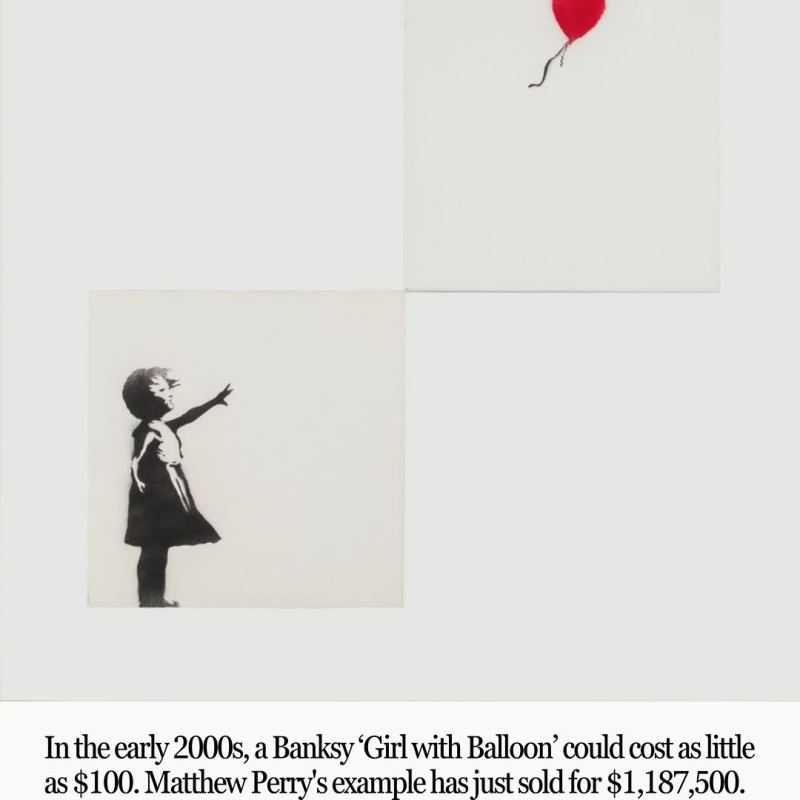
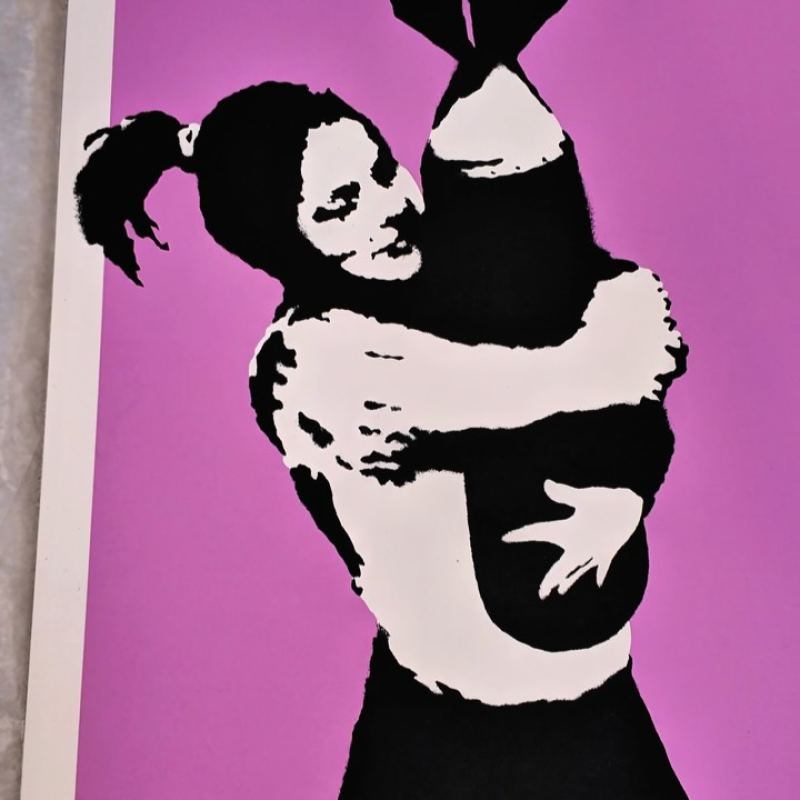
A collector searching for a specific Warhol, a rare Banksy edition or an important Hockney may not want to wait years for the right example to appear publicly. Even when a work does reach auction, there is no guarantee it will be acquired successfully.
Private sales allow collectors to pursue works more directly.
In practice, some of the most interesting collector conversations begin long before an artwork reaches the market. Rather than monitoring auction calendars and waiting for opportunities to appear, many buyers already have a clear idea of the artists, series or specific works they hope to acquire. The challenge is often not deciding what to buy, but finding the right example when it eventually becomes available.
Why Experienced Collectors Often Buy Privately
One of the biggest misconceptions about private sales is that they exist exclusively for ultra-high-net-worth collectors operating at the very top end of the market.
In reality, many collectors begin buying privately much earlier than people assume.
Often this happens because their interests become more specific. Instead of broadly browsing what is available, they start searching for particular works, editions, colourways, periods or provenance histories. The more focused the objective becomes, the more valuable private sourcing can be.
We increasingly see collectors moving towards private acquisitions as their collections mature. Early purchases are often exploratory, shaped by what happens to be available at a particular moment. Over time, collecting tends to become more deliberate. Buyers develop stronger preferences, become more selective and begin focusing on works that fit a wider collecting narrative rather than simply adding another name to the wall.
Private sales also allow for a different pace of decision-making. Rather than competing against a countdown clock and a room full of bidders, collectors can spend time reviewing provenance, condition reports and market context before proceeding. Discussions can happen more gradually and acquisitions can be structured around the specific requirements of buyer and seller.
For many collectors, that flexibility becomes increasingly attractive as collections evolve.
When Auctions Make More Sense
For all the advantages of private sales, auctions remain the right choice in many situations.
Collectors looking to discover new artists, monitor market activity or participate in highly competitive sales often benefit from the transparency and visibility auctions provide.
Auctions can also be valuable educational tools. Even collectors who rarely bid often spend considerable time reviewing catalogues, estimates and results because they provide useful insight into how different parts of the market are evolving.
There is also a level of excitement that private sales rarely replicate.
When a major artwork appears publicly after years in a private collection, the auction environment can create momentum that is difficult to achieve elsewhere. In some cases, competitive bidding pushes prices well beyond expectations precisely because multiple buyers are pursuing the same opportunity simultaneously.
Certain works genuinely benefit from that environment.
Why More Collectors Are Using Both
The most experienced collectors rarely approach the market as though they need to choose a side.
They do not think in terms of auction versus private sale. Instead, they think about access.
Some acquisitions simply make more sense at auction. Others are far easier to secure privately. The most experienced collectors are usually less interested in the channel itself than they are in maximising their chances of acquiring the right work under the right circumstances.
If an important work becomes available publicly, an auction may be the best route. If a collector is searching for something highly specific, private sourcing may offer a more effective solution. In many cases, both channels become part of the same collecting strategy.
This is particularly true as collections become more focused and acquisition decisions become more deliberate. Collectors are often less interested in where a work comes from than whether it is the right work in the first place.
Ultimately, most collectors become less concerned with how a work is acquired and more concerned with whether it deserves a place within their collection.

Auctions remain some of the most visible and influential parts of the contemporary art market. They generate headlines, establish public benchmarks and continue to play an important role in shaping collector behaviour.
Yet they represent only part of a much larger ecosystem.
Private sales have become increasingly important because they offer something many collectors eventually begin to value: access, flexibility and the ability to pursue specific works outside the constraints of a public auction calendar.
The most successful collectors tend to be remarkably flexible in this respect. They understand that different artworks require different approaches, and that building a collection is often less about following a fixed strategy than responding intelligently to opportunities as they emerge.
The strongest collections are rarely built through a single route. More often, they are shaped by a collector’s ability to navigate different parts of the market and understand when each approach offers an advantage.
For that reason, the most useful question is rarely whether auction or private sale is better. It is whether a particular route brings you closer to the artwork you actually want to own.